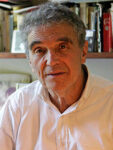
Robert Coles (photo courtesy of The New Press)
Coles writes how the female student “began to give me a detailed, sardonic account of college life, as viewed by someone vulnerable and hard-pressed by it.” As she worked her way through Harvard, she cleaned other students’ rooms, and a fellow student propositioned her.
She told Coles, “That guy gets all A’s. He tells people he’s in Group 1 [the top academic category]. I’ve taken two moral-reasoning courses with him, and I’m sure he’s gotten A’s in both—and look at how he behaves with me, and I’m sure with others.’”
Before she left Coles’ office, the anguished student asked her teacher the question he could not answer then: “How do we teach people to be good? What’s the point of knowing well, if you don’t keep trying to become a good person? [italics Coles’]
Coles admits that he was “exhausted and saddened—and caught up short” by the two-hour conversation with his student, who soon left Harvard. However, he also began searching for answers, asking questions such as: “How might we teachers encourage our students (encourage ourselves) to take that big step from thought to action, from moral analysis to fulfilled moral commitments?”
He writes that his seminar student “challenged us to prove that what we think intellectually can be connected to our daily deeds.” He asked how we bridge the gap between what we think and what we do.
Thirty years later, reading about the Cornell rape case, I searched a file cabinet drawer stuffed with teaching sources I used during my forty-year career. The folder I hoped to find held several copies of Coles’ article, a revealing reminder of how often I had shared it with teachers and students. And here we are still.
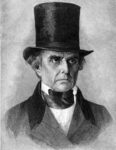
Thomas Gradgrind (image courtesy of Paul Brians, Washington State University)
In one way, I feel like writing, “Well, if Robert Coles couldn’t figure out how to bridge intellect with action, how could any of us?” Or did Coles give us hope and a path when he used the verb encourage? His use of that word shows he did not subscribe to Thomas Gradgrind’s philosophy in Charles Dickens’s novel Hard Times.
“‘Now, what I want is, Facts. Teach these boys and girls nothing but Facts. Facts alone are wanted in life. Plant nothing else and root out everything else. You can only form the minds of reasoning animals upon Facts: nothing else will ever be of any service to them. This is the principle on which I bring up my own children, and on which I bring up these children. Stick to Facts, sir!”
If facts alone educated a student, then teaching would be easy. Write a syllabus. Follow it to the letter. Have rules such as attendance requirements. Pass judgment by issuing grades on anything, or everything said or written by a student. Then pronounce each one either accomplished or not; dismiss them, then welcome the next batch.
But would this teaching style bridge the disparity? It didn’t work for Gradgrind, and it won’t for us. So, we come back to Coles, who asks how educators can encourage their students and themselves “to take that big step from thought to action, from moral analysis to fulfilled moral commitments?
Stories! Explore stories with your students that interest, excite, and even intrigue you. Have no answers but have many of what Sam Wells calls “wonderings” (an open question: “I wonder what my reader is thinking now?”). Instead of a didactic lecture, conduct a “shared inquiry” into a topic, listening more than you talk. Probe gently. Listen intently! And have everyone, even the teacher, write and share.
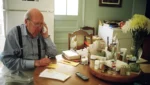
Rev. Will D. Campbell (photo courtesy Southern Spaces)
“But,” you may say, “that will take time to change intellect into act.” That is true; education takes time. No class rules, syllabuses, grades, seminars, or large lectures alone will change a student’s behavior. But that is our only option. As Will D. Campbell writes in his history of Mercer University’s early integration (The Stem of Jesse), “And the best teaching is sometimes subliminal values caught, not taught.”
In the seminar, Coles taught his distraught student to use the converging artistic and literary sensibilities in Raymond Carver’s fiction and poetry, along with Edward Hooper’s paintings and drawings, to explore the personal and social loneliness of Americans.
But if that sounds, as it does for me, too complex to even register, much less facilitate (teach), there is plenty of opportunity for teaching/learning for us all, so much art for us to explore and shape into a bridge from knowing to doing.
Like educators today, Coles struggled as he encouraged his students (and himself) through community service, writing papers that described their efforts to bridge intellect to action and “to honor through action the high thoughts we were discussing.”
I had thought to list some of my favorite stories, novels, art, and more as recommendations, but I realized that each teacher, no matter the level they teach, needs to use what they embrace but still wonder about. Use what excites you, and your students will, too.
In early 1963, as he led Mercer to integrate, Dr. Rufus Harris, the president, received a letter endorsing his decision. The writer, a 1911 graduate of Mercer, ended his supporting letter with: “This letter is likely due to the seed sown in English class where I sat under Professor Carl Steed. He was a great advocate of the rights of the Negro even then and did not wait until Sunday to say so.”
I wonder what stories Professor Steed read so long before 1963, and that could also help us today?