The tourist and the citizen.
Modern travelers imagine themselves as worldly people. They ate in Bangkok, meditated in Bali, photographed sunsets in Santorini, and posted evidence of each accomplishment for public inspection, like Facebook. They speak of cultures, experiences, and horizons.
They are modern. In search of depth. Steadfast in equality.
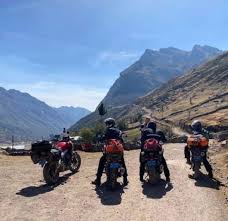
Courtesy Facebook
How do I know? Because they congratulate themselves on social media.
Yet their experience deserves attention, perhaps because it is something else entirely. Perhaps travel has become one of the defining rituals of affluent societies: a performance of significance in an age haunted by insignificance. Perhaps it is not a confrontation with reality but an escape from it.
Tourists and citizens are not the same people.
The citizen belongs somewhere. The tourists pass through.
The citizens know names. The tourist collects images.
The citizen inherits obligations. The tourist purchases experiences.
But in an age that celebrates movement, this distinction has nearly vanished. Travel is spoken of as an unquestioned good. It broadens the mind, cultivates empathy, and deepens understanding.
The assumption is so universal that questioning it seems almost impolite. To admit that one has little interest in seeing the world is treated as a kind of repugnant failure.
Yet there is something curious about a society that can cross oceans while remaining blind to what lies a mile from home.
A person flies thousands of miles to witness the authenticity of a Balinese village, but does not know the name of the roofer sweating on a nearby house in one-hundred-degree heat.
Americans now travel thousands of miles to encounter the poor, provided the poor are sufficiently foreign. They seek wisdom from distant cultures but have never listened carefully to the cashier, the warehouse worker, the single mother, the mechanic, or the old veteran who lives down the street.
The world, it seems, becomes visible only after it is sufficiently exotic. This is not curiosity. It is consumption.
The traveler consumes places the way earlier generations consumed products.
Cities become destinations.
Destinations become experiences.
Experiences become stories.
Stories become social capital.
The journey is transformed into a credential.
One needs only observe modern travel for a few moments to recognize that much of it is performed before an audience. The photographs are not merely records. They are declarations. They announce that one has been somewhere interesting, done something meaningful, and become someone worth noticing.

Courtesy Douglas Giles on Medium
The German philosopher Jürgen Habermas described an older social order in which status was displayed publicly before spectators. In many respects, social media has revived this impulse. We live in a culture of public representativeness, where identity must be continuously exhibited and confirmed.
The destination matters less than the evidence of arrival. A race to stamp your existence into being. A treadmill of next, next journey, next picture, next validation.
The irony is difficult to miss.
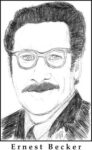
Caricature courtesy of The Gemsbok
Ernest Becker argued that much of human behavior is shaped by our awareness of death. Human beings cannot escape the knowledge that their lives are temporary. Consequently, they seek forms of symbolic immortality—ways of convincing themselves that they matter, that their existence leaves a mark, that they have lived fully before the curtain falls.
Modern travel fits this pattern remarkably well. Travel promises deliverance from this anxiety. It assures us that we are not ordinary. We are adventurers. Explorers. Citizens of the world. But this promise conceals an uncomfortable truth. One can circle the globe while remaining a stranger to reality.
Reality is not found only in temples, beaches, and mountain ranges. It is found in obligation. It is found in proximity. It is found in the stubborn presence of other people whose lives intersect with our own, whether we wish it or not.
Tourists can always leave. Citizens cannot.
This is why citizenship demands a deeper form of attention.
–To know a place requires more than visiting it. It requires remaining there long enough for its romance to disappear. It requires encountering not merely beauty but difficulty. Not merely novelty but responsibility.
–A republic depends upon this kind of attention, and democratic life is sustained not by people who have seen most countries but by people who have seen their own realities, clearly.
–The health of a nation rests upon whether its citizens understand the lives of those around them.
Do they know how the roofer lives? Do they understand the exhaustion of the night-shift workers? Have they spoken to the young man staring through the school window, imagining a future that seems forever out of reach? Have they paid attention to the waitress, the janitor, the landscaper, the truck driver?

First published in 1849, it is still available for purchase.
The result is we know fragments of everywhere and the substance of nowhere.
Henry David Thoreau once observed that he had traveled widely in Concord. The remark was not provincial. It was radical. Thoreau understood that depth and distance are not the same thing. One may travel endlessly across the surface of the earth while never penetrating beneath the surface of anything.
Seeing deeply is harder than moving constantly. Movement is exciting. Attention is demanding.
Travel offers novelty. Citizenship requires commitment. The modern traveler often mistakes the first for the second.
The challenge of modern life may not be learning how to see more of the world. It may be learning how to see the world already before us.
The republic does not urgently need more tourists. It needs more observers. More neighbors.
More citizens.
__________
Cover graphic courtesy New Politics.